The Artisans Behind Pakistan’s Contemporary Fashion Movement
When a Pakistani brand describes something as artisan-made, it is worth asking what that actually means, because the term gets stretched in both directions.
At one end it means genuine hand production by craftspeople whose families have practised the skill for generations. At the other it means a machine-made garment with a story attached.
The gap between those two is enormous, and it is mostly invisible in a product photograph.
Demand for Pakistani dresses in the USA has grown fast enough that the question now matters commercially. Buyers looking at Pakistani suits for women increasingly want to know who made the thing. When they search Pakistani suits online, the production method has become part of the comparison rather than an afterthought.
Who These Craftspeople Actually Are
Block printers working with hand carved wooden blocks, often using patterns held within a family for generations. Handloom weavers produce khaddar and other textured fabrics that industrial looms cannot replicate. Embroiderers working techniques that take years to learn and cannot be taught quickly. Dyers who understand how natural and low impact dyes behave differently across fabrics and seasons. Most are concentrated in Punjab and Sindh, in communities where the skill is local rather than individual.
What Fast Fashion Did to Them
· Machine production undercut hand work on price, and the majority of the industry followed the price.
* Commissions dried up for a generation, pushing many craftspeople out of the trade entirely.
· Skills that take fifteen to twenty years to master disappear within one generation if nobody is buying.
* What gets lost is not only technique but the informal apprenticeship structure that transmits it.
· Nobody rebuilds this quickly. Once the chain of transmission breaks, it usually stays broken.
How Contemporary Brands Are Reversing It
The brands doing this seriously commission continuously rather than occasionally, which is what makes the work viable as a livelihood. Craft is used in core production rather than in a limited edition line for marketing purposes.
· Pakistani dresses made this way take longer to produce, which caps volume and forces smaller collections.
* Unstitched suits remain in these ranges partly because hand printed fabric sold by the length is a natural fit for the production method.
· Ready to wear suits made with hand finished fabric take longer still, since the finishing has to happen before construction.
How to Tell Genuine Hand Work
Look for variation. Two pieces from the same run will not be identical if they were made by hand. Slight irregularity in a block print, where the block placement shifts marginally, is the clearest signal. Machine printing produces flawless repetition across every metre, which is exactly what gives it away. Hand finished edges have a different quality of line than machine stitching, visible on close inspection. Brands doing genuine hand work usually explain the process in detail, because it is the thing they are proudest of.
Why It Matters Beyond Aesthetics
Craft skills survive through use rather than through preservation efforts or documentation. A brand commissioning hand work weekly is doing more for the technique than any heritage initiative. There is an economic argument too. These are livelihoods in communities with limited alternatives. Among Pakistani suits made at scale, the craft component is usually the first thing cut when margins tighten. Pakistani embroidered suits are particularly exposed, since machine embroidery is cheap and superficially convincing.
Quick Styling and Use Cases
· Let the craft lead: pair a hand block printed piece with plain trousers and minimal jewellery. Nothing should compete.
· Everyday: a printed cotton kurta over jeans. The print carries the outfit so the rest can stay simple.
· Office: handwoven khaddar in a neutral. The texture reads considered rather than decorative.
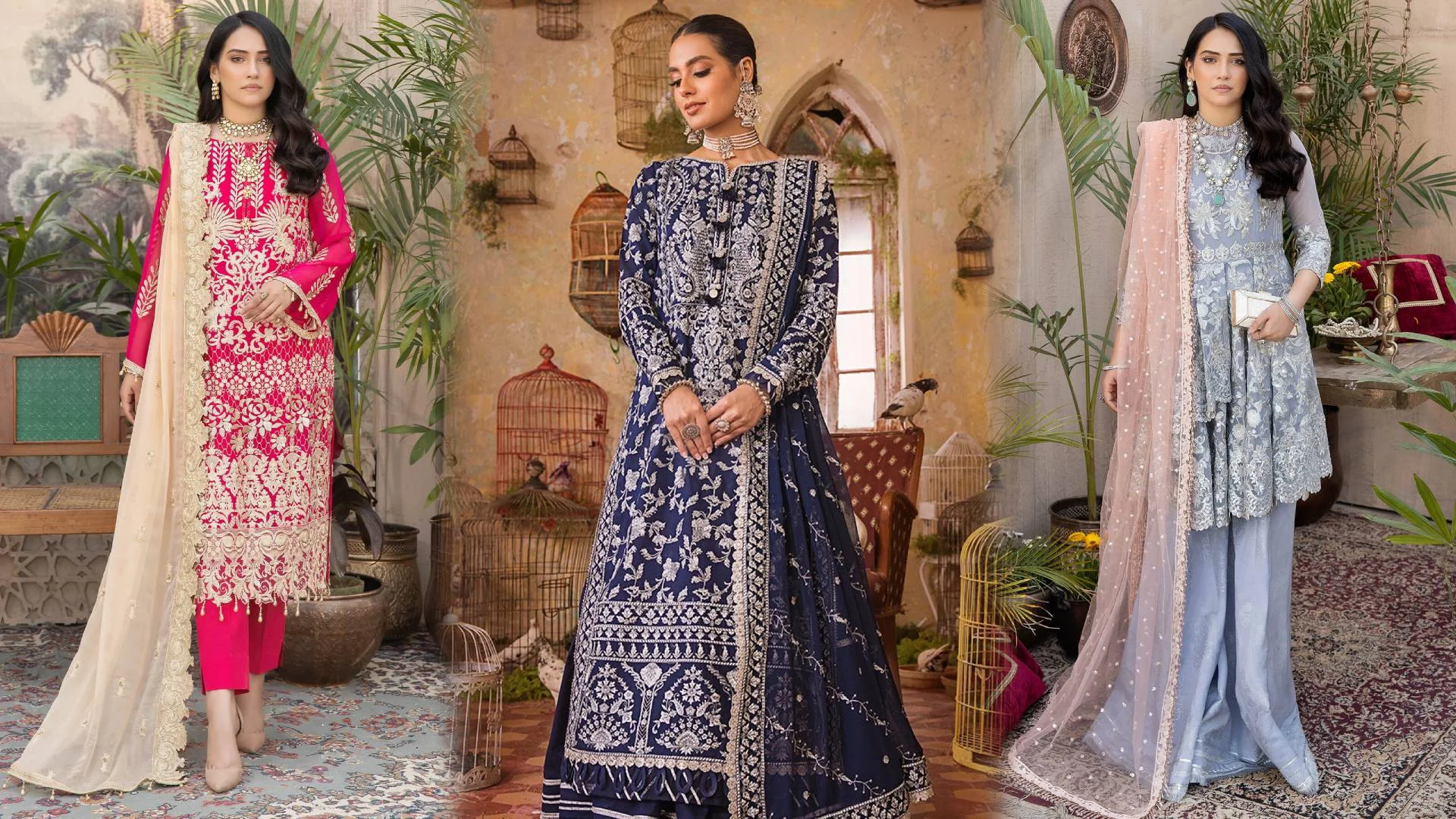
· Evening: tonal embroidery in a deeper colour with a chiffon dupatta in a contrasting texture.
· Summer: hand printed lawn with wide leg trousers and flat sandals.
* Winter: khaddar in rust or charcoal with a shawl draped long.
Conclusion
The contemporary Pakistani fashion movement gets discussed mostly in terms of designers and silhouettes. The more interesting story is happening a layer below that, in workshops where the actual making occurs.
Those craftspeople are the reason any of this is distinguishable from clothing made anywhere else. Remove them and you have a nice silhouette that could have come from a factory in any country.
The brands worth paying attention to are the ones treating this as production reality rather than marketing language.
Khatepoesh is one example worth looking at. The brand was founded in 2016 specifically out of a desire to work with craftsmen directly, and hand finishing remains part of core production rather than a limited line. Their work is at khatepoesh.com.
Buying hand made keeps the skill economically alive, which is ultimately the only thing that protects it.