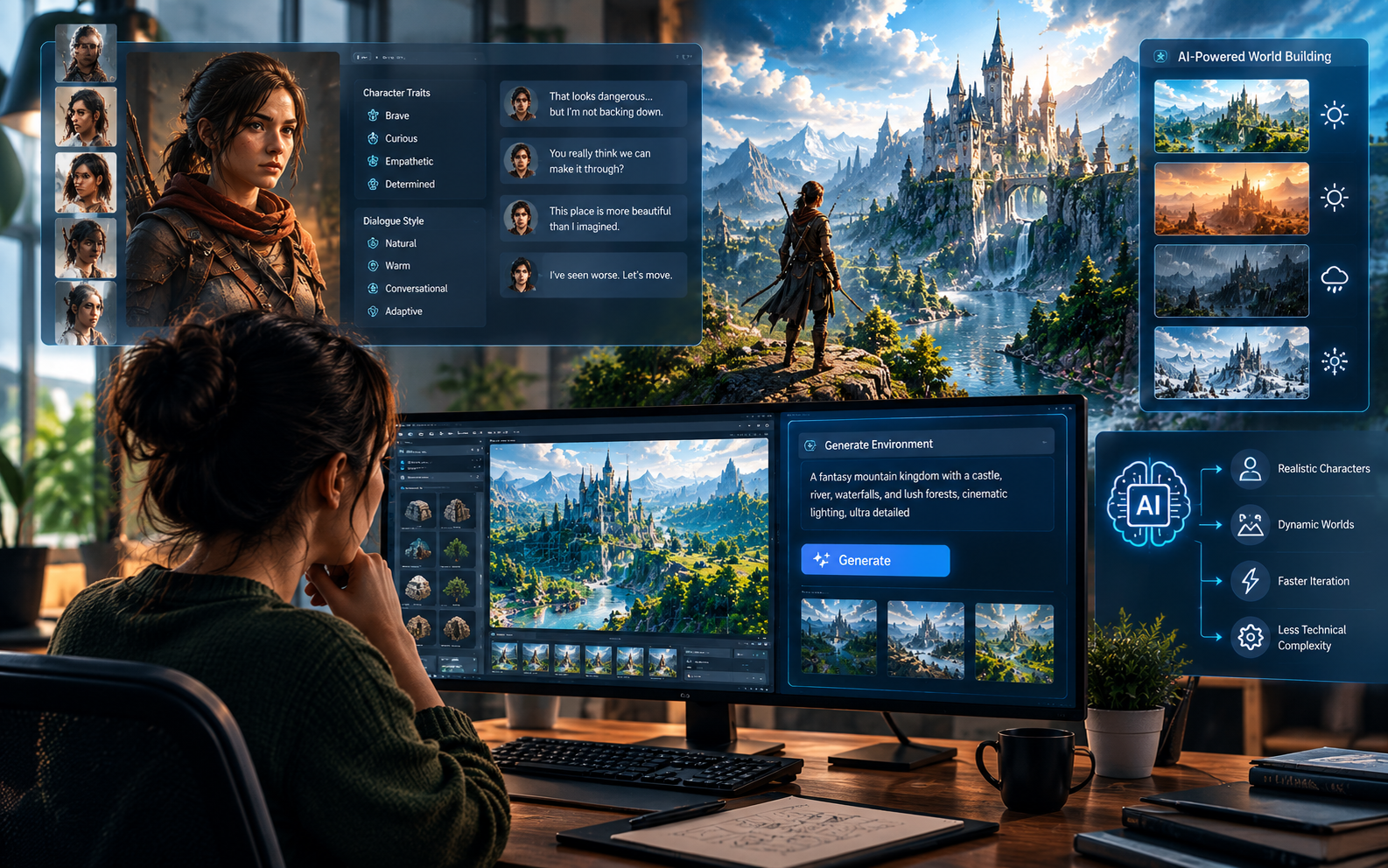
How AI Supports Better Game Characters and Worlds
Characters and worlds are the elements of games that stick in players’ memories long after specific mechanics fade. A memorable character that feels real, with distinct personality and genuine responses to what a player does, creates emotional connection that pure mechanics never could. A world with a clear identity and specific atmosphere becomes something players want to return to, not just for what they can accomplish there, but for the experience of being in that space. AI is changing how creators build these crucial elements, not by replacing the creative vision that defines them, but by removing technical obstacles that used to stand between imagination and execution.
Why Characters and Worlds Are Hardest to Get Right
Building a character that feels genuinely real is difficult because it requires dozens of small decisions working together in harmony. Personality, speech patterns, reactions to situations, consistency across different contexts, all of it needs to feel authentic rather than scripted. That authenticity only emerges through many rounds of refinement, testing how a character actually feels when real players interact with them, adjusting based on observation.
Worlds have similar challenges. A cohesive game world requires consistent internal logic, atmospheric consistency, meaningful detail that rewards exploration, visual and audio language that reinforces identity. None of that emerges accidentally, all of it requires deliberate creative choices refined through testing and observation.
Traditional development made both harder because technical implementation consumed enormous time, leaving limited resources for the creative refinement that actually determines quality. You’d be halfway through a project before realizing a character’s dialogue felt inconsistent or a world’s atmosphere wasn’t landing right, and by then it was too late for meaningful rework.
How AI Removes Technical Barriers to Character Development
Handling Complex Dialogue Systems Automatically
Building a character with natural dialogue used to require either extensive manual scripting of every possible interaction, or complex technical systems to handle variation and responsiveness. Modern AI tools simplify this dramatically, translating character descriptions and personality traits into dialogue that feels natural and responsive without requiring manual scripting of every line.
This doesn’t mean the tool writes your character’s lines for you. It means describing who your character is, what they want, how they speak, and seeing that description translate into functioning dialogue systems. The creative work of defining who the character is and ensuring they respond authentically to what a player does remains entirely yours. The technical implementation of making those responses work consistently moves to the platform.
Making Character Iteration Fast and Intuitive
Once a character exists, refining them requires testing how they actually feel in play. Does this dialogue choice sound right for their personality? Would they actually respond this way to that situation? Traditional development meant returning to code, adjusting lines, rebuilding systems, testing again. AI tools compress that cycle dramatically. Adjust character responses, test immediately, iterate based on observation, all within the same session.
That fast feedback loop is genuinely crucial for character development, since understanding whether a character feels authentic only happens through direct interaction, not through planning or documentation.
How AI Supports Better World Building
Handling Environmental Complexity Automatically
Building a cohesive game world requires managing enormous amounts of interconnected detail, environmental systems responding to player action, time-of-day variations affecting appearance and mood, weather systems influencing gameplay. Traditional implementation meant coding all of that manually, which consumed time and created friction for iteration.
Modern tools handle that environmental complexity automatically, letting creators describe how a world should respond to various conditions and seeing it reflected immediately. A creator can test how a world feels under different lighting, with different weather, at different times, without needing to understand or implement the technical systems underneath.
Supporting Environmental Storytelling
One of the most elegant ways to build world identity is through environmental storytelling, visual history that tells stories without explicit explanation. AI tools support this by making it easy to populate worlds with meaningful detail, create visual patterns that reward exploration, establish architectural language that communicates world identity through design choices.
The technical infrastructure handling collision detection, visual rendering, environmental interaction moves to the platform. The creative work of deciding what stories to tell through environment, what details matter, how to build visual and spatial language remains entirely yours.
Enabling Consistent Atmosphere Throughout Development
A world’s atmosphere depends on countless small decisions working together, from lighting choices to audio design to environmental pacing. Maintaining consistency across all those elements used to require extensive documentation and constant discipline to avoid drifting from the original vision. Modern tools make consistency more achievable by letting creators test how atmospheric choices actually work together, iterate rapidly on combinations, and refine until everything reinforces the intended identity.
Creating Characters That Feel Real
Define Personality, Then Let It Respond Authentically
The strongest game characters aren’t the most complex mechanically, they’re the ones that feel like they have genuine motivations and respond authentically to what a player does. Building that authenticity requires deep clarity about who the character is, what they want, what they’re willing to compromise on, what would break them.
That clarity is entirely creative work. You’re deciding who this person is, what drives them, how they see the world. The platform handles translating those decisions into functioning dialogue and behavior. The creative work of understanding your character deeply, making them feel real, remains entirely yours.
Test Reactions With Real Players
A character only feels authentic once real players interact with them and respond to how they behave. That testing reveals whether a character’s responses feel genuine or scripted, whether their personality comes through clearly, whether players connect with them emotionally. Modern tools make gathering that feedback practical through fast iteration, letting you refine characters based on how real people actually respond.
Building Worlds That Invite Exploration
Layer Details That Reward Curiosity
The most engaging worlds have depth that rewards exploration, visual details that hint at history, environmental stories that unfold through observation. Building that layered depth used to require enormous implementation effort, creating variations for every possible exploration path.
Modern tools let you create those layers more efficiently, focusing creative effort on what details matter and what stories to tell, with the platform handling the technical infrastructure of making those variations functional.
Establish Visual and Audio Identity
A world’s personality comes partly from consistent visual and audio language, choices about color palettes, architecture style, sound design, all of it working together. That consistency requires deliberate creative choices, not technical implementation. Modern tools make testing how those choices work together fast and intuitive, letting you refine until everything reinforces your intended identity.
A Practical Example of Character and World Development
Boy Salon demonstrates what AI support for character and world building produces, a game with clear identity and personality that comes from deliberate creative choices rather than default systems. The game shows how focused, intentional design of both world and characters creates something with genuine personality.
This kind of character-driven, atmosphere-rich game is increasingly achievable for independent creators learning how to create a game with strong identity, since tools that handle technical infrastructure automatically let human creativity focus on what actually determines whether characters feel real and worlds feel alive.
What AI Tools Don’t Do For You
Decide What Makes Your Character Unique
AI can help translate character descriptions into functioning dialogue. It can’t decide what makes your character worth creating in the first place. That creative vision, that sense of who this person is and why they matter, comes entirely from you.
Choose Your World’s Identity
Tools can help manage environmental complexity. They can’t decide what makes your world specifically different from others, what atmosphere you’re pursuing, what visual and audio language reinforces your identity. Those choices remain entirely yours.
Replace Testing With Real Players
Understanding whether a character actually feels authentic or a world actually creates the intended atmosphere only happens through direct player interaction. No tool replaces the value of watching real people experience what you’ve built and adjusting based on what you observe.
Common Mistakes When Building Characters and Worlds
Over-Scripting Character Responses
The temptation to write dialogue for every possible situation can actually make characters feel less authentic, since you’re trying to predict what feels right rather than discovering it through iteration. Modern tools encourage building character foundations and letting dialogue emerge through testing, which tends to produce more natural results.
Designing Worlds In Isolation
The most unique worlds come from testing how they actually feel when players move through them, not from planning every detail in advance. Modern tools make that testing practical, so leaning into iteration rather than trying to perfect everything upfront tends to produce stronger worlds.
Treating Characters and World as Separate
The most immersive games have characters that feel like they belong in their specific world, with personality shaped by the environment and circumstances they inhabit. Building them together, letting each influence the other, produces more cohesive results than developing them independently.
Final Thoughts
AI supports better game characters and worlds not by replacing the creative vision that defines them, but by removing technical friction so human creativity can focus on what actually matters: understanding your characters deeply, making them feel authentic through iteration, building worlds with clear identity and meaningful atmosphere. That support shifts development from a technical struggle to a creative conversation between creator and player, with the platform handling infrastructure while humans handle imagination and judgment. The characters and worlds that stick in players’ memories come from that combination of creative vision and refined execution, enabled by tools that remove obstacles to both.