5 Costly Mistakes US Companies Make When Buying a Robotic Palletizer (And How to Avoid Them)
Automating end-of-line packaging is one of the more consequential decisions a production facility can make. Unlike replacing a single piece of equipment, adding a robotic palletizer affects how your entire line flows — from case conveyance through to pallet dispatch. The investment is significant, the installation is disruptive, and the results, good or bad, tend to be long-lasting.
Yet many US manufacturers and distribution operations still approach this purchase the way they would a simpler capital equipment decision: by comparing specs, collecting quotes, and selecting the lowest acceptable cost. The problems that follow are not random. They tend to cluster around the same recurring errors — decisions that seemed reasonable at the time but created compounding operational issues months or years later.
Mistake 1: Treating the Purchase as an Equipment Decision Rather Than a Systems Decision
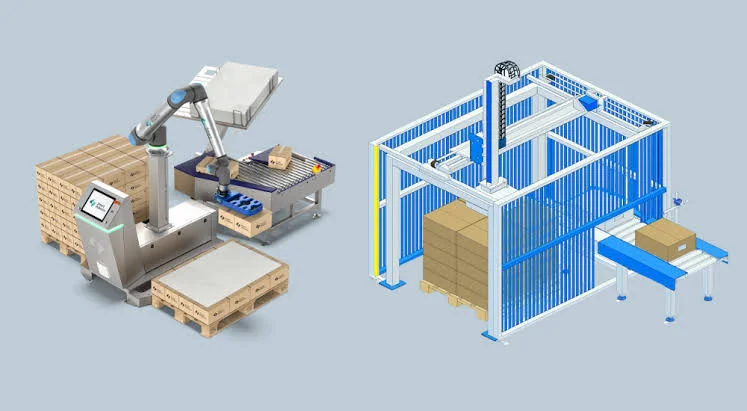
A robotic palletizer does not operate in isolation. It sits at the convergence of your line speed, your product mix, your pallet specifications, your warehouse flow, and your labor model. When companies evaluate this equipment purely on its mechanical capabilities — reach, speed, payload — they often overlook how it will actually perform within their specific operational environment. For a more complete view of what this type of system involves and what to evaluate, a detailed Robotic Palletizer guide can help frame the right questions before you enter conversations with vendors.
Why Integration Complexity Is Underestimated
The robot arm itself is rarely where problems develop. The issues tend to emerge at the interfaces — where the conveyor meets the infeed, where the pallet dispenser times with the stacking cycle, where the stretch wrapper’s cycle time conflicts with output rate. These integration points require engineering time, clear specifications, and often negotiation between multiple vendors about who owns each interface.
Companies that treat the palletizer as a standalone purchase often find themselves in a gap: the robot vendor delivered what they quoted, but nobody is accountable for making it work within the full line. Establishing single-source responsibility for integration — or at minimum, a clearly defined integration scope — before signing contracts is one of the most important decisions you will make in this process.
Mistake 2: Scoping for Current Production Instead of Future Demand
Production environments change. SKU counts grow. Pack configurations shift with customer requirements. Retailers impose different pallet patterns. A robotic palletizer installed to handle today’s product mix may be inadequate — or poorly configured — within three to five years, even if the physical equipment is still functional.
The Hidden Cost of Under-Scoping
When a system is scoped too tightly, the limitations show up gradually. A new SKU requires a new end-of-arm tool that wasn’t budgeted. A customer requests a mixed-pallet configuration the current software can’t handle without manual workarounds. The line starts requiring operator intervention at rates that undermine the efficiency gains the system was supposed to deliver.
These aren’t catastrophic failures — they’re slow erosions. And because each individual workaround seems manageable, the cumulative operational drag often goes untracked until a formal audit or line review surfaces the true cost. Scoping decisions should account for your product roadmap, not just your current catalog. If you don’t have a clear view of that roadmap, it’s worth pausing the purchase until you do.
Mistake 3: Selecting a Vendor Based on Price Without Evaluating Service Infrastructure
The initial purchase price of a robotic palletizer represents a fraction of its total cost over a ten-year operating life. Maintenance contracts, spare parts availability, software updates, remote diagnostics, and on-site service response times all contribute substantially to the true cost of ownership. Yet many procurement processes weight the upfront quote far more heavily than the service model behind it.
What Service Infrastructure Actually Means in Practice
When a robotic palletizer goes down during a high-volume production run, the speed of recovery is determined almost entirely by how well the vendor has prepared for that scenario. Do they have field technicians within a reasonable distance of your facility? Is there a remote support team available outside business hours? Are critical spare parts stocked domestically, or do they ship from overseas with week-long lead times?
These are not hypothetical concerns. Robotic systems require periodic maintenance, and unexpected failures do occur. The difference between a two-hour recovery and a two-day recovery can be measured directly in lost production and missed shipment commitments. Before selecting a vendor, ask for specific data on average response times and parts availability. Then verify those claims through references from existing customers in similar industries.
The Risk of Choosing an Unfamiliar Brand for Price
Lower-cost equipment from vendors with limited US service infrastructure has become a recurring problem in the industry. The initial savings are real. The service gap becomes real shortly after. When evaluating vendors, the question isn’t whether they can install the system — it’s whether they can support it reliably for the next decade within your operating context.
Mistake 4: Skipping or Shortcutting the Site Assessment
A site assessment is not a formality. It is the process by which a vendor or integrator identifies the physical, electrical, and operational conditions that will determine how the system is designed, installed, and commissioned. Companies that rush this step — or allow vendors to skip it in favor of a remote quote — frequently encounter installation complications that delay startup and inflate project costs.
What Gets Missed Without a Proper Assessment
Floor load capacity, ceiling height clearance, electrical panel capacity, compressed air supply, and access routes for equipment delivery are among the practical constraints that affect both system design and installation logistics. Beyond the physical environment, a thorough assessment should also capture how the existing line operates in real conditions — including the variability in case quality, conveyor timing, and staffing patterns that affect how the robot will actually perform day to day.
It is also worth noting that certain industries are subject to specific safety standards for robotic equipment. The Occupational Safety and Health Administration provides guidance on robotic workplace safety requirements that should inform both site design and system configuration from the outset. Missing these considerations during assessment can create compliance gaps that require costly retrofits after installation.
The Commissioning Delay Problem
When site conditions don’t match what the vendor assumed, commissioning — the process of programming, testing, and adjusting the system to perform as specified — takes longer. In some cases, it requires design changes to the system itself. These delays are almost always more expensive than the time a proper site assessment would have taken at the start. Treat the assessment as a required step, not an optional service.
Mistake 5: Underinvesting in Operator Training and Changeover Planning
A robotic palletizer can be programmed, installed, and commissioned successfully, and still underperform for months because the people responsible for running it don’t understand how to operate it confidently. This is one of the most consistently underestimated variables in automation projects, and it affects every level of the workforce involved — from floor operators to maintenance technicians to production supervisors.
Why Training Scope Matters More Than Training Duration
Standard vendor training programs typically cover basic operation, fault recovery, and simple maintenance tasks. What they often don’t cover is how to handle the specific product configurations, changeover sequences, and edge cases that your facility deals with routinely. If training is treated as a checkbox rather than a knowledge transfer process, operators develop workarounds rather than competencies. Those workarounds accumulate into operational inconsistencies that are difficult to trace and harder to correct.
Changeover planning is equally important. If your facility runs multiple SKUs or pallet configurations, the process for switching between them — tool changes, program recalls, pallet pattern adjustments — needs to be documented, practiced, and timed before the system goes live. A changeover that takes two hours instead of thirty minutes because nobody planned the sequence represents a recoverable but unnecessary loss.
Maintenance Readiness Is a Separate Problem
Robotic systems require preventive maintenance on a defined schedule. If your maintenance team hasn’t been trained to perform that work, you will either fall behind on maintenance — increasing failure risk — or become dependent on the vendor for every routine task, which carries both cost and scheduling implications. Building internal maintenance capability, even at a basic level, is a decision that pays back steadily over the life of the system.
Closing Considerations
None of the mistakes described here are unusual, and none of them reflect poor judgment in isolation. They reflect the natural tendency to simplify a complex decision under time and budget pressure. The challenge with robotic palletizing systems is that the consequences of early decisions — on integration scope, vendor selection, site preparation, and training — compound over time in ways that aren’t always visible until they’ve already cost the operation significantly.
The most effective way to avoid these outcomes is to slow down the front end of the process. Spend more time on integration planning before comparing quotes. Evaluate vendor service infrastructure with the same rigor as product capability. Conduct a thorough site assessment before anything is specified. Build a training plan before the system ships, not after it arrives.
Companies that take this approach consistently report faster time to stable production, lower total cost of ownership, and fewer operational disruptions in the first two years of operation. That’s not a coincidence — it’s the result of treating a systems decision like one from the beginning.