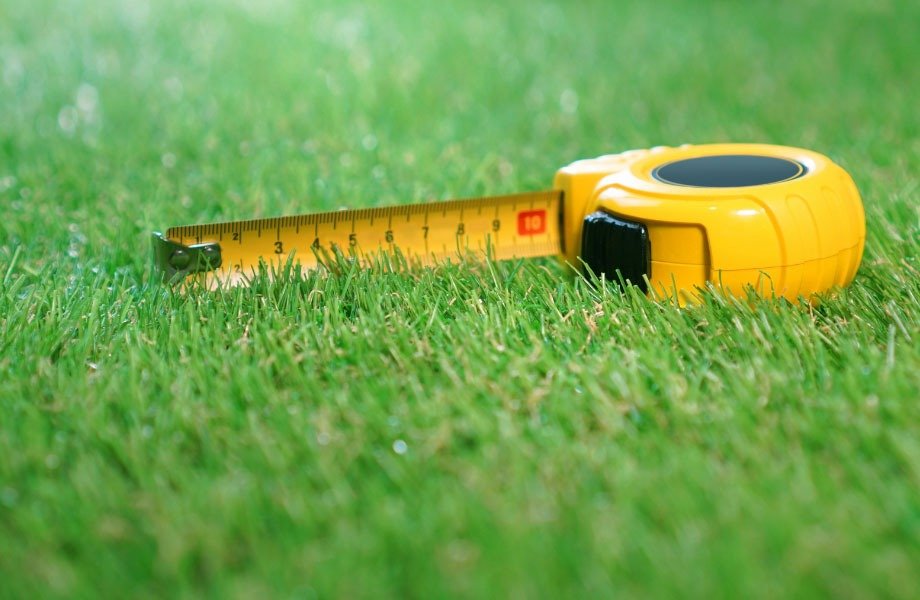
How to Measure Your Lawn Before Laying Turf
Laying new turf is one of the most satisfying lawn improvements a homeowner can make, but getting the preparation right is essential for a successful result. One of the most important steps before purchasing turf is calculating the exact area that needs to be covered. Ordering too little leaves awkward gaps, while ordering too much wastes money on unused product.
Accurate measurement is straightforward for simple rectangular lawns but requires a bit more effort for irregularly shaped areas or gardens with obstacles and garden beds. The good news is that with a tape measure and a few simple calculations, most homeowners can arrive at a reliable figure that ensures they purchase the right amount of turf for their space.
Basic area calculations for common shapes
For a simple rectangular or square lawn, calculating the area is as straightforward as multiplying the length by the width. If your lawn measures twelve metres long by eight metres wide, the total area is ninety-six square metres. It is always worth adding an extra five to ten per cent to this figure to allow for edge trimming, waste and any irregularities in the shape of the area.
Once you have your measurements, sourcing quality turf for installation is the next priority. Professionals offering turf installation Fraser Coast and in other regional areas can advise on the most suitable grass varieties for your specific climate, soil conditions and intended use. Getting professional guidance before purchasing ensures you end up with turf that performs well in your environment long after installation is complete.
Circular lawns require a different calculation. The area of a circle is determined by multiplying pi (approximately 3.14) by the square of the radius. If your circular lawn has a diameter of ten metres, the radius is five metres, and the area is approximately seventy-eight and a half square metres. Most turf suppliers are happy to help verify measurements and check calculations before an order is placed.
Measuring irregular shapes and complex gardens
Most real lawns are not perfect rectangles or circles. Garden beds, trees, paths, pools and other features create irregular shapes that require a slightly different approach to measurement. The most practical method is to divide the total lawn area into smaller, simpler shapes — rectangles, triangles and circles — calculate each one separately, and then add the results together.
For triangular sections, the area is calculated by multiplying the base by the height and then dividing by two. This formula handles most wedge-shaped and tapered sections of lawn accurately. For more unusual curves and organic shapes, the triangle method works reasonably well as an approximation, though treating these sections conservatively and adding a slightly larger margin helps cover any variation.
Another helpful technique for irregular lawns is the grid method. Draw a rough map of the lawn on paper, overlay a grid with each square representing a known area (for example, one square metre), and count the number of complete and partial squares covered by the lawn. This method is particularly useful for gardens with sweeping curves that resist simple geometric breakdown.
Using digital tools to simplify measurement
Several digital tools can simplify the lawn measurement process. Google Maps and similar satellite mapping applications allow you to trace the outline of your lawn from above and calculate the area automatically. While not perfectly accurate at the residential scale, these tools provide a useful cross-check against manual measurements and can be particularly helpful for larger properties or challenging shapes.
While planning your outdoor space, it is also worth thinking about how you present your home’s interior. Many Australians are investing in quality pieces for their walls, and browsing options for wall art Australia can be a rewarding way to complement the outdoor improvements you are making. A fresh lawn and a refreshed interior together create a strong sense of renewal throughout the home.
Smartphone apps designed specifically for garden planning and area measurement are also available and can be quite accurate when used carefully. These apps typically use the phone’s GPS or camera to map and measure outdoor spaces. They are most reliable in open areas with clear boundaries and tend to be less accurate in heavily shaded spaces or where buildings create GPS interference.
Accounting for slopes and uneven ground
Slopes present a specific consideration when calculating lawn area. A lawn measured horizontally covers less actual surface area than the same slope measured along the ground surface. For gentle slopes, the difference is negligible, but for steeper sections it becomes significant enough to affect how much turf is required. Measuring along the actual ground surface, rather than from above, gives a more accurate result on sloped areas.
Preparing a sloped area for turf installation also requires specific techniques to ensure the grass establishes well and does not erode after laying. Proper soil preparation, appropriate grading and the use of turf pegs or pins on steeper sections are all part of a successful installation. Consulting a turf professional before installing on a significant slope is well worth the effort.
Soil testing is also recommended before installation, particularly for lawns that have previously performed poorly. Testing reveals soil pH, nutrient deficiencies and organic matter levels that affect how well new turf will establish. Addressing any deficiencies identified during testing before laying turf significantly improves the chances of a fast, even and healthy establishment.
Preparing for delivery and installation
Once measurements are confirmed and turf is ordered, preparation of the soil is the final step before installation. The existing surface should be cleared of weeds, debris and old grass, and the soil should be loosened, levelled and amended if necessary. Poor soil preparation is one of the most common reasons that new turf fails to establish evenly or struggles during its first summer.
Turf should be installed as soon as possible after delivery, ideally on the same day. Fresh-cut turf is a living product that deteriorates quickly if left in rolls or on pallets, particularly in warm weather. Having all soil preparation completed before delivery ensures the turf can go down immediately, giving it the best possible start in its new location. Taking time to measure accurately before ordering saves money, reduces waste and ensures your new lawn looks professional from the day it is laid. The modest investment of an hour with a tape measure and some simple calculations can make a significant difference to the cost and quality of the finished result, regardless of the size or shape of your outdoor space.