How Do You Plan Solar Power for a Remote Cabin Weekend?

A remote cabin weekend changes the way electricity gets planned. Instead of reaching for an outlet whenever power is needed, every device becomes part of a limited energy budget. Refrigeration may run throughout the stay, while lights, laptops, cooking equipment, and personal devices follow different schedules. Solar input adds another variable because energy can return during daylight. A practical plan should therefore cover the entire weekend as one energy cycle, from arriving with a charged battery to managing each day’s consumption and solar replenishment.
Map the Weekend Before Calculating the Power
Divide Your Electricity Needs Into Three Groups
Start by separating cabin equipment into continuous, scheduled, and occasional loads. Continuous loads may include a refrigerator or connectivity equipment. Lights and laptops usually operate during predictable periods, while a kettle or other cooking appliance may draw power only briefly. This classification makes energy planning clearer than simply adding every wattage together. For each device, multiply its wattage by expected operating hours to estimate watt-hours, then add the results for a daily total. The Anker SOLIX S2000 provides 2,010Wh of stored capacity, so that figure can serve as the available energy reference when creating a cabin schedule. Anker’s stated runtime examples include up to 35 hours of refrigerator backup and 81 hours for a 10W Wi-Fi router.
Give Morning and Evening Different Energy Budgets
Cabin electricity rarely stays constant throughout the day. Morning may bring coffee preparation, breakfast, and device charging. Midday often has lighter demand while people hike, fish, or spend time outside. Evening may concentrate lighting, entertainment, and cooking into a few hours. Planning these periods separately shows when stored energy faces the greatest demand. It also creates a natural role for solar charging during daylight. A portable solar power generator can act as the center of this cycle by storing daytime energy for later activities. The S2000 supports 400W solar input and is available with either a 200W or 400W bifacial solar panel. Under the stated conditions, 400W solar input can recharge it to 80% in 4.5 hours.
Check Which Appliances May Run at the Same Time
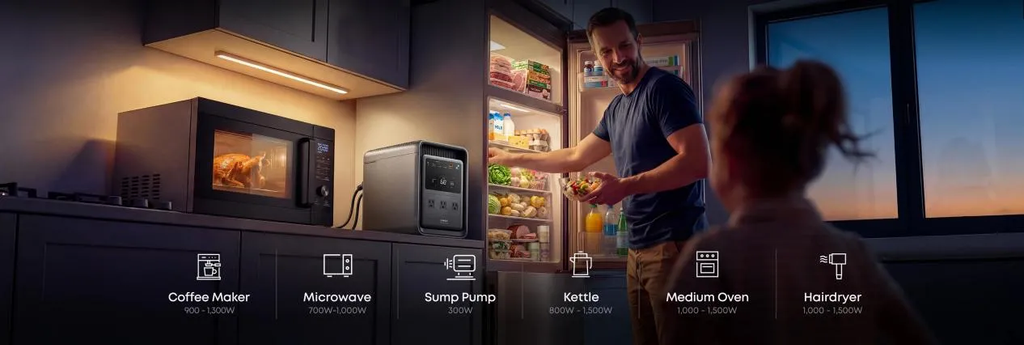
Daily watt-hours tell you how much energy the weekend may require, but simultaneous loads determine the output requirement. Imagine preparing breakfast while a refrigerator continues operating and several devices remain connected. The combined wattage at that moment matters more than the daily total. Make a second list showing which appliances are likely to overlap, then compare that figure with the power station’s output rating. The Anker SOLIX S2000 provides 1,500W rated AC output and 3,000W peak output. Anker states that it can power 99% of essentials and lists appliances such as coffee makers, kettles, microwaves, and medium ovens within applicable power ranges. This makes output planning a separate step from calculating overall weekend energy consumption.
Make Daylight Part of the Cabin Routine
Schedule Flexible Tasks Around Solar Hours
Once the essential loads have a reserved energy budget, move flexible activities toward the hours when solar charging is available. Laptops, cameras, phones, and other rechargeable electronics can often be charged during the day rather than after sunset. Cooking schedules may also shift depending on the equipment and planned activities. The goal is to enter the evening with enough stored energy for overnight essentials and comfort. The S2000’s OptiSave technology is relevant during periods with lighter loads. Anker states that it has a 6W active idle power draw and provides 10% higher power efficiency at a 100W load. For a multi-day cabin stay, small efficiency gains can support a more deliberate pattern of daytime replenishment and nighttime consumption.
Treat the Drive as Part of the Energy Plan
A remote weekend does not begin at the cabin door. Travel time can become another part of the charging strategy. Starting with a full battery provides the simplest baseline, while vehicle-based charging can add flexibility on the road. The S2000 supports six recharge methods. Besides solar and AC charging, the supplied information lists a 120W car outlet and 400W alternator charger input. This creates several possible stages in the trip: recharge from AC before leaving home, add energy during the drive when appropriate, and shift to solar after arriving. The same logic applies to the return journey. Thinking about transportation as part of the energy cycle makes the plan cover the complete weekend rather than only the hours spent inside the cabin.
Leave Room for Unplanned Cabin Time
A weekend schedule can change. Rain may keep everyone indoors longer, dinner may take more time, or an extra evening of movies and device charging may become part of the trip. A practical energy budget therefore should not assign every available watt-hour before arrival. Reserve part of the stored capacity for changing plans and monitor consumption as the weekend progresses. The S2000 supports remote monitoring through the Anker app, where users can view power information and manage the station. Its eight outlets across the front and rear also provide connection flexibility around a cabin setup. At 35.7 pounds with built-in handles, the unit can move between the vehicle and cabin as the power arrangement changes.
Conclusion
Planning solar power for a remote cabin weekend works best as a three-day energy schedule rather than a simple appliance checklist. Estimate continuous, scheduled, and occasional loads, identify periods of overlapping demand, reserve evening energy, and make daylight and travel part of the recharge plan. The Anker SOLIX S2000 provides 2,010Wh capacity alongside solar, AC, and vehicle charging options, offering a practical example of how stored power and replenishment can work together throughout a remote stay.