How Do Humanoid Robots Turn Perception Into Action?
Humanoid robots turn perception into action through a tightly linked pipeline: sensing, understanding, planning, and control. They first collect data from cameras, depth sensors, motion sensors, and other inputs to build a live picture of their surroundings. AI models then interpret that data, identify objects, track people, estimate distances, and determine what task should happen next. Once a decision is made, motion planning systems calculate safe body movements, while low-level controllers coordinate joints, balance, and force in real time. This process happens continuously, not as separate steps but as a fast feedback loop. The result is a robot that can navigate spaces, respond to people, and perform physical tasks with purposeful, adaptive movement in dynamic environments.
How Do Humanoid Robots Perceive Their Environment?
Visual Sensors and Cameras: How Robots Recognize Objects and Spaces
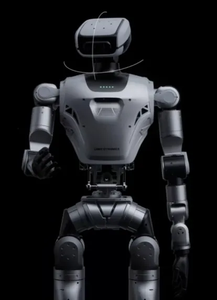
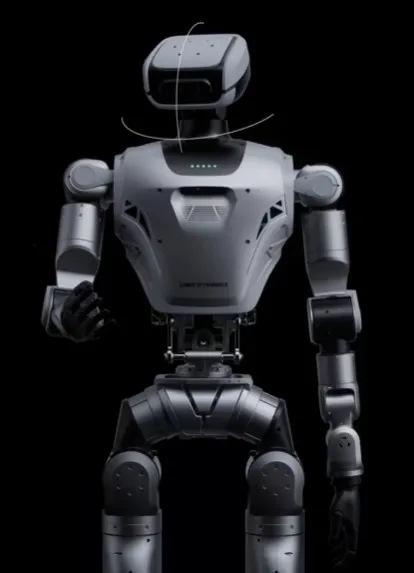
Humanoid robots rely heavily on visual sensing to understand objects, people, and spatial layouts. For an embodied AI robot, visual perception is essential for interacting intelligently with its surroundings. Standard RGB cameras capture texture, color, edges, and motion, helping the robot recognize tools, doors, furniture, and human gestures. Depth cameras add distance information, allowing the machine to estimate object positions, map free space, and judge how far it can safely move. With these inputs, perception software can detect obstacles, localize the robot within a room, and support autonomous navigation or manipulation.Camera placement also matters. A head-mounted sensor provides a broad view for navigation, while a chest-mounted sensor improves close-range awareness during hand tasks and human interaction. Together, these visual inputs help an embodied AI robot understand both its wider environment and the space directly around its body.
Sensor Fusion: Combining Visual, Depth, and Motion Data
Perception becomes more reliable when a humanoid robot combines multiple sensor streams instead of trusting one source alone. Sensor fusion merges RGB images, depth data, and motion measurements from an IMU to create a more stable understanding of the environment and the robot’s own state. Visual data identifies objects and scene features, depth data measures shape and distance, and the IMU tracks orientation, acceleration, and motion changes. This combination improves localization, obstacle detection, and balance estimation, especially when lighting shifts or movement causes visual blur. A self-developed 6-axis IMU with reduced drift can strengthen this process by delivering cleaner motion data. Support for external sensors such as LiDAR and additional cameras further expands perception coverage in complex spaces and varied operating conditions.
How Does AI Transform Perception Into Decisions?
Environmental Understanding and Real-Time Scene Interpretation
Once sensor data is collected, AI converts raw inputs into meaningful context. Computer vision models classify objects, segment surfaces, estimate human pose, and identify navigable paths. Scene understanding goes beyond naming what the robot sees; it determines relationships, such as whether a chair blocks a route, whether a person is reaching for an item, or whether a table surface is clear enough for placement. Real-time interpretation is essential because humanoid robots operate in changing environments where people move and obstacles appear unexpectedly. The AI must continuously update the robot’s internal world model and predict near-term changes. This allows the system to choose safe, useful actions instead of reacting blindly. Strong environmental understanding is what turns perception data into operational awareness and actionable intent.
Task Planning and Vision-Language-Action Models
Decision-making sits between perception and movement. After understanding the scene, the robot must choose what to do and in what order. Task planning breaks a goal into executable steps, such as approach, align, reach, grasp, and place. Vision-language-action models extend this process by linking visual input with verbal instructions and physical behavior. If a user gives a spoken command, the system can map language to objects, locations, and task sequences within the current scene. This makes interaction more natural and expands the robot’s usefulness beyond fixed routines. A bilingual voice interaction system can support Chinese and English conversation and voice-based control, while custom knowledge bases help tailor responses for specific applications. These capabilities let the robot connect human intent with context-aware action planning.
How Do Humanoid Robots Convert Decisions Into Physical Movement?
Motion Planning, Balance, and Joint-Level Control
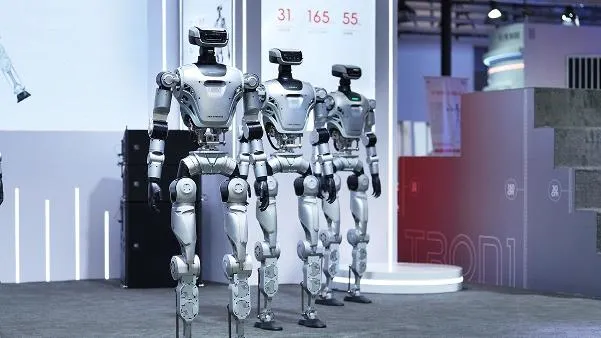
After AI selects an action, the robot must convert that goal into coordinated body motion. Motion planning computes a safe path for the torso, arms, legs, and end effectors while avoiding collisions and respecting joint limits. For humanoids, balance is equally critical. The control system continuously manages center of mass, foot placement, and body posture so the robot can walk, turn, reach, or recover from disturbance without falling. Joint-level control then sends precise commands to each actuator, regulating position, velocity, and torque at high frequency. A full-size humanoid with 165 cm height and up to 31 degrees of freedom can achieve more human-like posture and a wider range of movement, but it also demands highly coordinated planning and control to move smoothly and safely.
Real-Time Feedback and LimX Oli: Connecting Intelligence With Movement
Physical action only works when planning and control stay connected through real-time feedback. Sensors constantly report joint states, body orientation, contact changes, and nearby obstacles, allowing the robot to correct motion as conditions shift. LimX Oli reflects this closed-loop design by separating compute for motion control and perception, which supports advanced algorithm research while keeping movement responsive. Its head-mounted Intel® RealSense™ D435i supports wide-range perception and autonomous navigation, while the chest-mounted Intel® RealSense™ D435i helps with close-range manipulation, interaction, and obstacle avoidance. The platform also includes USB 3.0 and 3.2 interfaces for easy sensor integration. By linking perception, decision-making, and control in real time, a humanoid robot can move with more precision, stability, and task awareness.
Conclusion
Humanoid robots turn perception into action by running a continuous loop of sensing, interpretation, planning, and control. Cameras, depth sensors, and IMUs gather the information needed to understand space, objects, and body motion. AI then translates that data into scene awareness, task decisions, and action sequences aligned with human instructions or autonomous goals. Motion planning and joint-level control convert those decisions into stable, coordinated movement, while real-time feedback keeps the robot adaptive and safe. When these layers work together, a humanoid robot can do more than detect its environment; it can respond intelligently and physically within it. That is the core of humanoid robotics: not just seeing the world, but understanding it well enough to move through it with purpose.