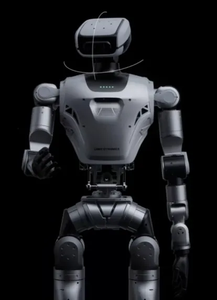
Physical AI Tips: Improving Robot Learning Efficiency
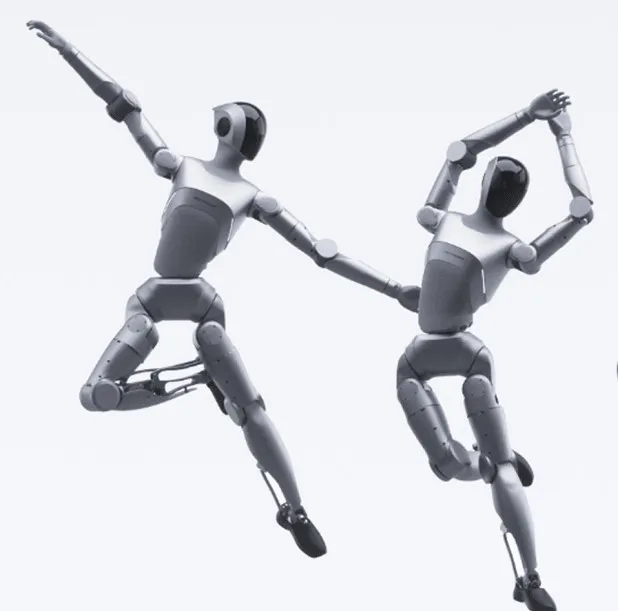
Physical AI improves robot learning efficiency when teams focus on the full pipeline, not just model size. Robots learn faster and perform better when data is clean, behavior targets are clear, simulation reflects real constraints, and deployment tools support continuous updates. Efficient learning also depends on hardware-aware design, because motion quality, thermal stability, battery endurance, and perception systems all affect training outcomes in the real world. For example, LimX Luna combines a 160cm humanoid form, second-generation Sys 0 engine, upgraded joint motors, improved thermal management, stronger battery management, multimodal interaction, and multi-layered safety architecture, making it a useful reference for practical Physical AI deployment. The best results come from treating robot learning as an integrated system spanning data, models, simulation, testing, and execution.
1. Build a Strong Foundation for Efficient Robot Learning
Collect High-Quality and Diverse Training Data
Efficient robot learning starts with data that reflects the environments, tasks, and edge cases the robot will actually face. For physical AI applications, collect demonstrations across different lighting conditions, floor materials, object positions, human interactions, and motion speeds. Label action outcomes clearly so the model can connect sensory input to successful behavior. Include failure cases, near-misses, and recovery sequences, because robots improve faster when they learn what not to do as well as what works. Balance datasets to avoid overtraining on easy scenarios. Standardize sensor synchronization, timestamps, and calibration before training begins. When possible, combine real-world logs with synthetic data to expand coverage. Strong data quality reduces retraining cycles, improves policy robustness, and accelerates deployment readiness for physical AI systems.
Choose the Right Model Architecture and Learning Strategy
Model selection should match the robot’s task complexity, control frequency, and onboard compute budget. For structured manipulation or navigation, modular pipelines often outperform monolithic systems because perception, planning, and control can be improved independently. Use imitation learning for fast skill bootstrapping, reinforcement learning for refinement, and supervised learning for perception components such as detection or pose estimation. Sequence models help when decisions depend on temporal context, while lightweight policies support lower latency at the edge. Keep action spaces well defined and reward functions aligned with real task outcomes. Regularly prune unnecessary parameters and monitor overfitting early. The right architecture reduces training time, improves sample efficiency, and makes robot behavior more stable during deployment.
2. Optimize Training Through Simulation and Model Improvements
Use Simulation to Accelerate Robot Training
Simulation speeds up robot learning by letting teams generate large volumes of interaction data without hardware wear, safety risk, or downtime. Build simulated environments that match the robot’s kinematics, sensor noise, joint limits, contact dynamics, and latency as closely as possible. Apply domain randomization to vary textures, lighting, friction, mass, and object placement so policies generalize better outside the simulator. Use curriculum learning to start with simple tasks and gradually increase complexity. Measure transfer readiness with task success, stability, and recovery metrics rather than relying on training reward alone. Simulation also makes parallel experimentation practical, enabling faster comparisons across policy versions, reward designs, and control strategies before committing to real-world trials.
Improve Training Performance with Modular AI Architectures
Modular AI architectures improve efficiency by separating perception, decision-making, language understanding, and motion generation into manageable components. This structure simplifies debugging, allows targeted retraining, and reduces the cost of changing one capability without rebuilding the whole stack. It also supports reuse across tasks, which is valuable when robots must handle varied real-world scenes. Natural language interfaces can further shorten development cycles by making task design more accessible. For instance, Luna features an AI task editor that creates scenes from simple language input and composes dance, motion, visual, and voice into complete tasks. Combined with multimodal interaction and natural gesture responses, this modular setup helps teams prototype behaviors faster and refine robot learning more efficiently.
3. Bridge the Sim-to-Real Gap for Better Robot Performance
Validate Models Through Continuous Testing and Evaluation
Continuous testing is essential because robot performance can degrade when conditions shift outside the training distribution. Evaluate models in staged environments before full deployment, moving from controlled trials to semi-structured spaces and then live settings. Track metrics such as task success rate, intervention frequency, collision avoidance, energy use, latency, and recovery time after errors. Include stress tests for extended operation, since thermal behavior and endurance affect sustained performance. Human-in-the-loop review is also important for identifying subtle failures in interaction quality, timing, or safety margins. Feed test results back into data collection and retraining workflows quickly. A disciplined evaluation loop improves reliability, shortens iteration cycles, and prevents expensive deployment issues from spreading.
Streamline Training and Deployment with Unified Frameworks
Unified frameworks make robot learning more efficient by connecting data pipelines, simulation tools, model training, validation, deployment, and monitoring in one workflow. Instead of moving assets manually between disconnected systems, teams can version datasets, reproduce experiments, and push validated policies into real robots faster. This approach also improves safety because updates can include automated checks for control limits, perception failures, and rollback procedures. For fleets, centralized coordination matters even more. Systems designed for synchronized execution can support large-scale rollout and testing with far less overhead. Luna’s intelligent swarm control, for example, synchronizes more than 200 units with millisecond precision, showing how tightly integrated orchestration can simplify deployment, consistency, and operational learning at scale.

Conclusion
Improving robot learning efficiency requires practical decisions at every stage of the Physical AI stack. High-quality data creates reliable foundations, well-matched models improve sample efficiency, simulation accelerates iteration, and modular architectures make systems easier to refine. Continuous evaluation then ensures policies survive real-world variation, while unified frameworks reduce deployment friction and support long-term improvement. The strongest robot programs do not treat learning as an isolated model problem. They align software, hardware, safety, and operations from the start. When teams build around that principle, robots learn faster, adapt more smoothly, and deliver better real-world performance. Physical AI advances most effectively when efficiency is engineered into the full lifecycle, from data capture to fleet deployment.