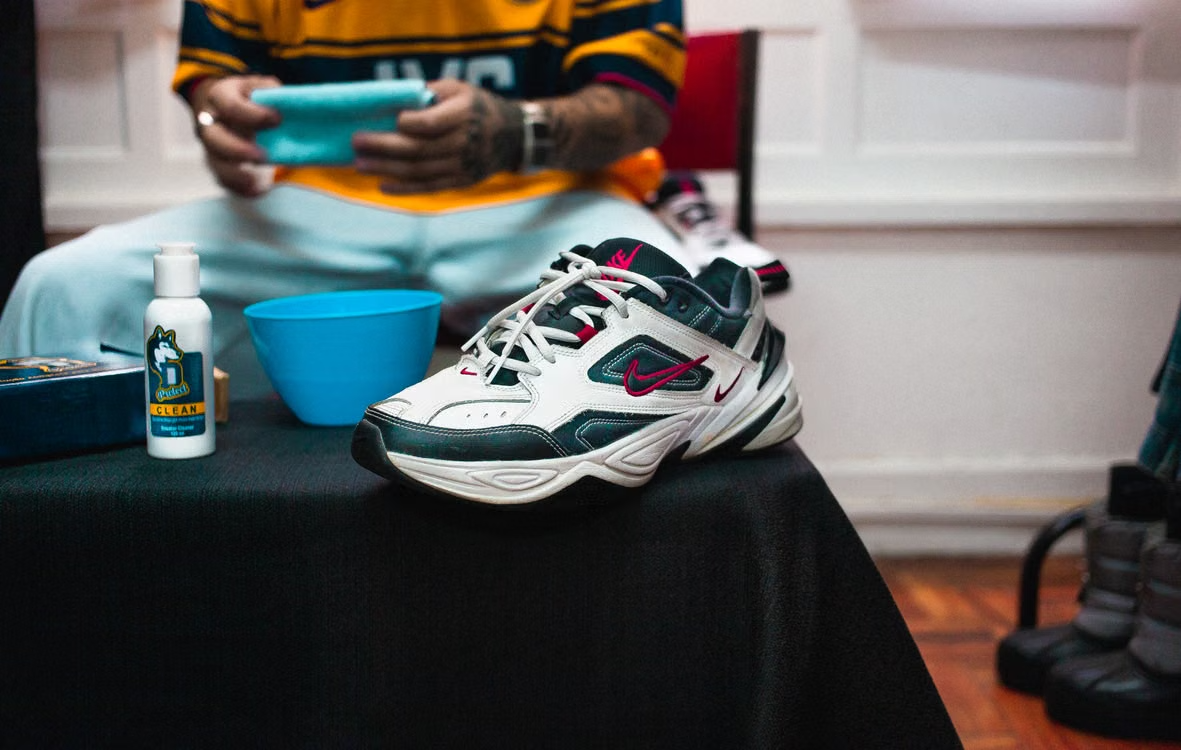
Leather Sneaker Care: The 2026 Guide to Keeping Them Looking New
Minimalist leather sneakers only look effortless if someone bothers to look after them. Good leather sneaker care is less about fancy products and more about a handful of habits repeated consistently. Skip them and even the cleanest, most expensive pair starts looking tired within a season.
Key takeaways
- Consistent, light habits matter more than occasional deep cleaning for leather sneaker longevity
- Condition leather every 4-6 weeks to prevent cracking and dryness
- Protectant sprays applied before wear reduce water and stain damage significantly
- Never machine wash leather sneakers; heat and water warp shape and weaken glue
- Proper storage with shoe trees and breathable conditions preserves shape between wears
This guide breaks down what actually matters: cleaning, conditioning, protecting, and storing leather sneakers so they hold their shape and colour for years rather than months. Along the way there’s a look at how brands like common projects approach materials, and why that affects how the shoes should be treated at home.
Why leather sneaker care matters more than people think
Leather is a living material, not plastic. It absorbs moisture, oxidises, and creases in response to how it’s worn and stored. Neglect it and the surface dries out, cracks form along the flex points, and the colour dulls unevenly.
Proper leather sneaker care isn’t about babying the shoes. It’s about slowing the natural wear process so the leather ages evenly instead of falling apart at the seams first. A pair looked after well can outlast three pairs bought cheap and ignored.
Daily habits that protect leather sneakers
Most damage happens gradually, not from one big spill. A few small habits make the biggest long-term difference.
- Wipe down the uppers with a soft, dry cloth after wearing them somewhere dusty or wet.
- Rotate between two or three pairs so no single pair absorbs sweat and moisture every single day.
- Use a shoehorn instead of jamming a foot in, which stretches and cracks the heel leather.
- Keep them away from direct radiators and car heaters, which dry leather out fast.
None of this takes more than a minute or two, but skipping it is exactly how good leather sneaker care habits fall apart within the first month of owning a new pair.
Cleaning leather sneakers without damaging them
Cleaning is where most damage actually gets done, usually from using the wrong products or too much water. The process should be gentle and infrequent rather than aggressive and constant.
Basic weekly clean
- Remove loose dirt with a soft brush or dry cloth.
- Dampen a clean cloth with lukewarm water, no soap unless there’s a stubborn mark.
- Wipe in circular motions, working from the toe back.
- Let the shoes air dry at room temperature, away from direct sun or heat vents.
Dealing with stains
For scuffs and light marks, a leather cleaner formulated for smooth or full-grain leather works better than dish soap or household cleaners, which strip natural oils. Test any product on a small hidden area first, since some minimalist leather sneakers use finishes that react differently to solvents.
Conditioning: the step people skip
Cleaning removes dirt but also strips some of the leather’s natural moisture. Conditioning replaces it, keeping the material supple instead of brittle.
A light leather conditioner or cream applied every four to six weeks, depending on how often the shoes are worn, is usually enough. Rub it in with a soft cloth, let it sit for a few minutes, then buff off any excess. Over-conditioning is a real risk too: too much product can leave the leather feeling greasy and attract more dust.
Brands that focus on minimalist leather sneakers, including common projects sneakers, tend to use undyed or lightly finished leathers precisely because they age well with this kind of light, regular conditioning. Heavily coated leathers need it less often but benefit from it just the same.
Protecting against water and stains before they happen
Prevention is far easier than repair. A water and stain protectant spray, applied to clean, dry leather before the first wear and reapplied every few weeks, creates a barrier that stops most everyday marks from soaking in.
| Product type | Use frequency | Main purpose |
| Soft brush / cloth | After every wear | Remove surface dust and dirt |
| Leather cleaner | As needed for stains | Lift dirt without stripping oils |
| Leather conditioner | Every 4-6 weeks | Keep leather supple, prevent cracking |
| Protectant spray | Every few weeks, especially before rain | Repel water and stains |
This kind of routine leather sneaker care is what separates a pair that still looks sharp after two years from one that’s cracked and discoloured after six months.
Storage matters as much as cleaning
How leather sneakers are stored between wears affects their shape and colour just as much as how they’re cleaned. Cramming them into a gym bag or leaving them by a damp doorway undoes a lot of good care work.
- Use shoe trees or stuff the toe box with paper to hold shape when not worn.
- Store in a cool, dry place away from direct sunlight, which fades leather unevenly.
- Avoid plastic bags for long-term storage; leather needs to breathe.
- Let wet shoes dry naturally rather than using direct heat, which warps the leather and weakens glue.
Common mistakes that shorten a sneaker’s life
A surprising number of leather sneaker problems come from good intentions applied badly. Washing machines, for instance, ruin leather sneakers almost every time, breaking down the glue and warping the shape even if the leather itself survives.
Other frequent mistakes include using generic all-purpose cleaners, storing shoes in damp gym bags overnight, and skipping conditioner because the leather still looks fine on the surface. By the time cracking shows up, the damage has usually been building for months. Anyone shopping for a first pair of minimalist leather sneakers should factor a basic care routine into the purchase from day one rather than treating it as an afterthought.
How often should leather sneakers actually be cared for
A simple, sustainable rhythm works better than an intense routine that gets abandoned after two weeks. Wipe down after each wear, deep clean when visibly dirty, condition monthly, and protect every few weeks depending on weather. That’s it.
For anyone building a small rotation of minimalist pairs, browsing a range like common projects shoes is a useful way to see how different leather finishes are meant to be worn and maintained, since care routines shift slightly depending on whether the leather is polished, matte, or suede.
Frequently asked questions
How often should leather sneakers be cleaned?
A quick wipe after each wear is enough for most days. A proper clean with leather cleaner is only needed every few weeks or when there’s a visible stain.
Can leather sneakers get wet?
Light rain won’t ruin them if they’re dried naturally afterward, away from heat. Prolonged soaking or standing water should be avoided, and a protectant spray helps reduce absorption.
What’s the best way to remove scuffs from leather sneakers?
A soft cloth with a small amount of leather cleaner usually lifts scuffs. For deeper marks, a leather eraser or a dab of matching leather cream can help blend the mark in.
Do leather sneakers need conditioner?
Yes, roughly every four to six weeks depending on wear. Conditioner replaces natural oils lost through cleaning and everyday exposure, preventing cracking over time.
Is it bad to wear leather sneakers every day?
Daily wear speeds up creasing and moisture buildup inside the shoe. Rotating between two or three pairs gives leather time to rest and dry out fully between wears.